
The Care Technology Shift No One Can Ignore: From Alerts to Context, From Detection to Prevention
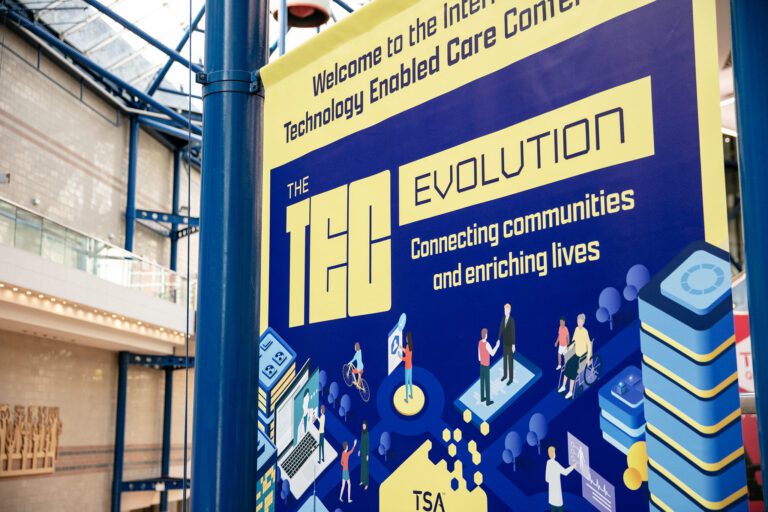
A week after ITEC 2026, one shift is clear: The sector isn’t just digitising.
It’s redefining what good looks like.
This isn’t about analogue to digital.
It’s about moving from reacting to incidents to understanding what leads to them.
The Shift: From Detection to Prevention
For years, care technology has focused on one question: What just happened?
Detect the fall.
Trigger the alert.
Respond quickly. That model is no longer enough.
Across ITEC, a different set of priorities emerged:
- Prevention, not just detection
- Near-falls and instability, not just impact events
- Context behind incidents, not just alerts
- Early signals, not just outcomes
Because by the time an alert fires, the risk has already materialised.
What the Sector Actually Needs Now
Care providers, local authorities, and TEC leaders are increasingly aligned on what’s missing:
1. Visibility Before the Incident
- Near-falls
- Self-recovered slips
- Transfer instability
- Behaviour changes over time
These are the signals that precede escalation – yet most systems don’t capture them.
2. Context, Not Just Alerts
An alert answers that something happened. It rarely answers:
- what led to it
- how it happened
- whether it’s part of a pattern
Without context, teams are left reconstructing events and repeating the same cycles.
3. Solutions That Work in Real Environments
Care is not a controlled setting. It involves:
- multi-occupancy rooms
- high-acuity residents
- unpredictable behaviour
- constant operational pressure
Technology that works in ideal conditions but fails in real ones does not scale.
4. Acceptance and Dignity
There is growing resistance to:
- camera-based systems
- intrusive monitoring
- solutions that compromise dignity
Particularly in bedrooms, night-time care, and sensitive environments.
Adoption depends on trust.
5. Seamless Integration
Stand-alone tools create friction. The expectation is now clear. Technology must integrate with:
- digital care planning systems
- nurse call platforms
- ARC pathways
And it must do so without increasing staff burden.
The Pressure: Digital Switchover Is Accelerating Decisions
The UK’s 2027 digital switchover is forcing providers and commissioners to act. Analogue devices are being phased out. Legacy systems are being audited. Compatibility is being reassessed.
But this creates a risk: replacing analogue with digital versions of the same limitations
Instead of rethinking what the system should actually do.
Standards Matter. But They Must Go Far Enough.
The work led by Care City to define minimum capabilities for sensor-based falls technology is an important step. It recognises that not all incidents are the same:
- Falls with impact
- Falls without impact
- Near-falls
- Situations where someone cannot recover
It also draws a critical distinction: Detection is not prevention.
The risk is that standards are shaped around what existing solutions can deliver, rather than what care actually needs.
Standards should raise expectations – not constrain them.
A Defining Divide: Built for Care vs Adapted to Care
A clearer distinction is emerging in the market:
Adapted Solutions
- Originating from other industries
- Retrofitted into care environments
- Designed for simpler use cases
Care-Native Solutions
- Built specifically for care environments
- Designed around dignity, complexity, and variability
- Developed to support real workflows
This difference becomes obvious in real deployments.
Where Hestia Fits
Hestia® was built from the ground up for care. Not as a fall detector.
Not as an add-on device.
But as infrastructure designed to address the gaps others leave behind.
Hestia enables:
- Detection of near-falls and instability
- Contextual understanding of incidents
- Operation in complex and multi-occupancy environments
- Privacy-first monitoring (no cameras, no audio, no wearables)
- Seamless integration into care workflows
It focuses on what happens before the incident, not just after it.
The Direction of Travel
The sector is no longer asking: Does it detect?
It is asking: Does it help prevent?
This is a higher standard. And it reflects a broader shift:
- From alerts → to insight
- From response → to prevention
- From products → to infrastructure
If You’re Reviewing Your Approach
If you are currently exploring:
- digital switchover readiness
- fall prevention strategies
- solutions for complex care environments
- ways to reduce repeat incidents and workload
It’s worth asking a different question: Are you solving the event, or the pattern behind it?
That’s where prevention begins.
The real upgrade isn’t digital.
It’s moving from reaction to prevention.
Explore Hestia
If you’re looking for a solution that:
- surfaces early risk signals
- provides context, not just alerts
- works in real care environments
- integrates into existing systems
- supports prevention, not just response
Get in touch to explore how Hestia fits within your service.